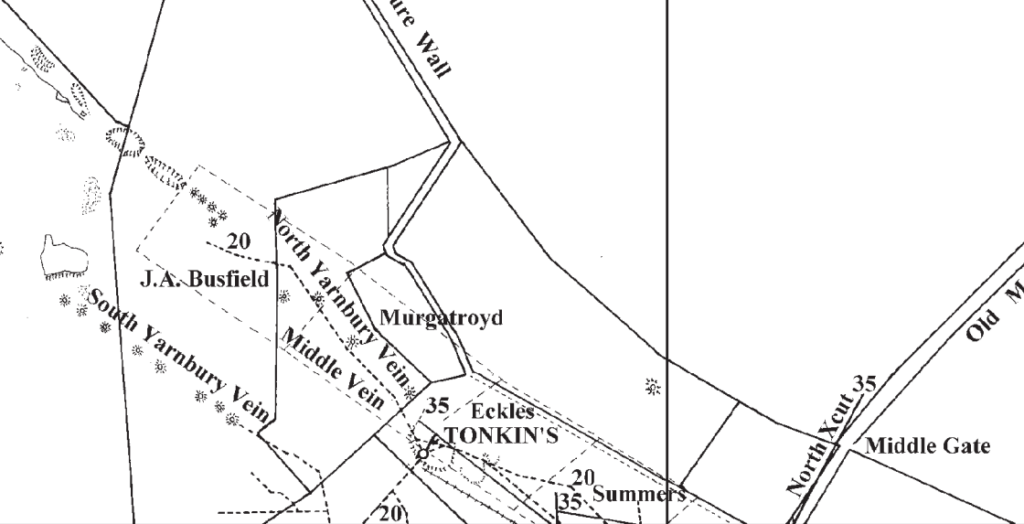
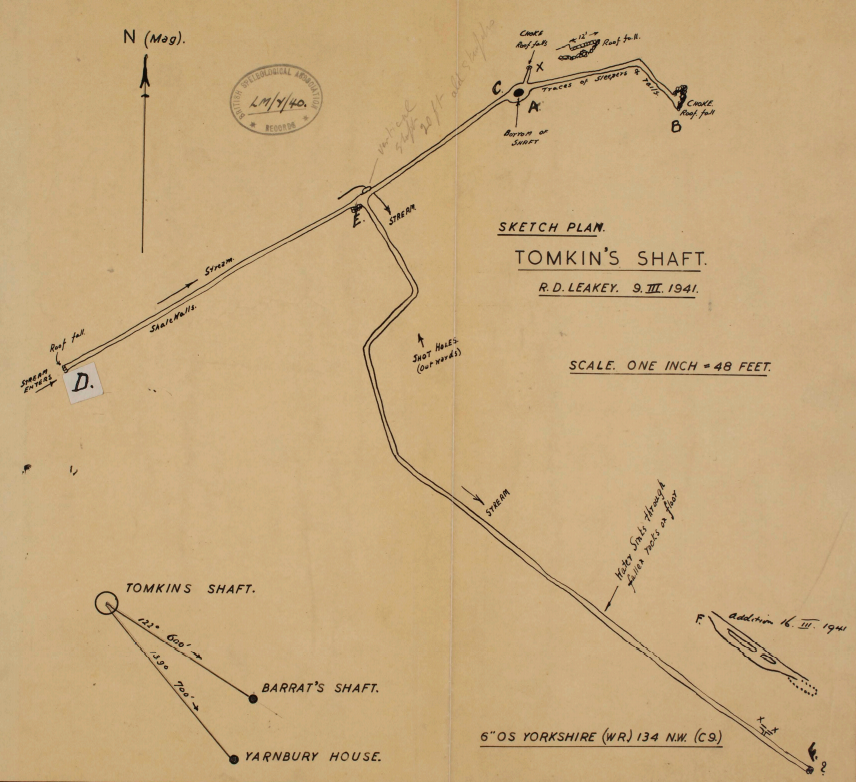
Tonkin’s shaft was initially sunk in the summer of 1825 and was the furthest mine to be connected via a small railway system to the Low Grinding Mill situated at Yarnbury. The other shafts connected to this system were Bowdin’s, Barratt’s and Mason’s. Tonkin’s shaft is situated at grid reference SE 0131, 6606 and is only a short distance North of the mine managers house at Yarnbury. It was sunk to a depth of 20 fathoms which is 37 metres, with passages driven from the bottom of the shaft. It is unknown exactly when the mine was abandoned, however it was sometime in the 1840’s. It is assumed that the shaft was named after John Tonkin who was an underground captain for John Barratt one of the joint Mineral Agent’s.
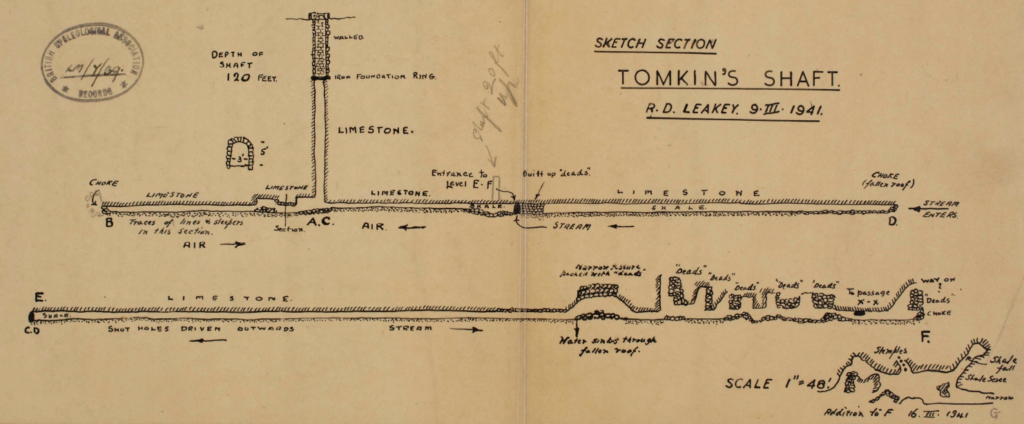
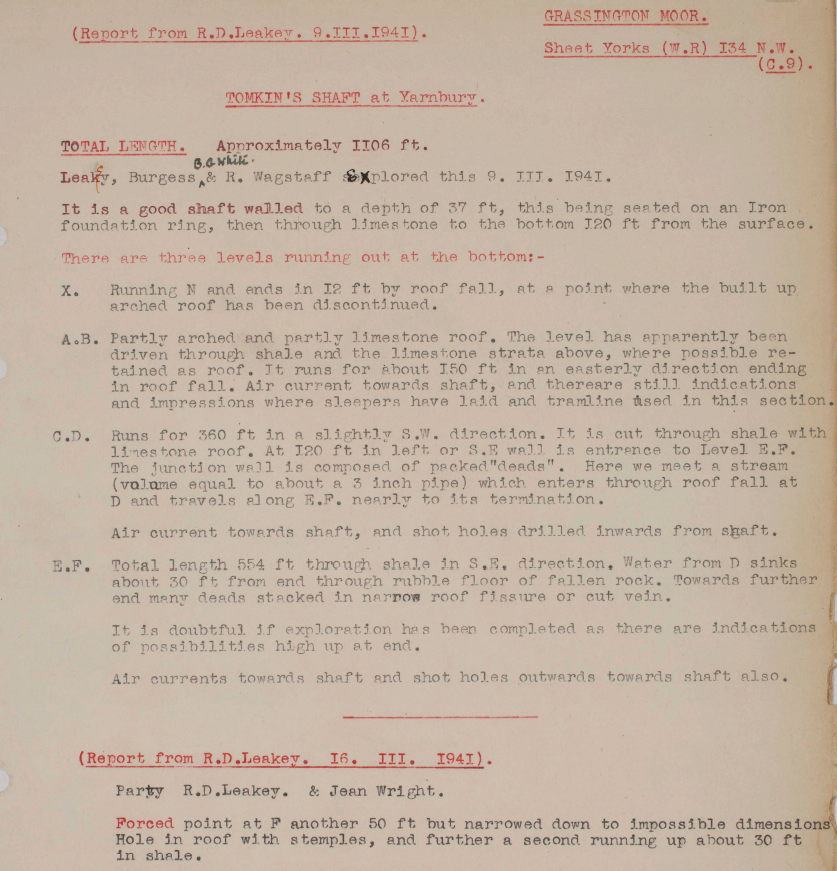
In 1941, members of the British Speleological Association explored Tonkin’s shaft and recorded around 337 metres of passage. At the bottom of the shaft they found three levels running North, East and South East, with a further passage connected to the South East level continuing back towards Yarnbury. All the levels were eventually blocked with roof fall, however compared to a lot of the mine shafts across Grassington Moor this mine contained a significant amount of accessible passages. The BSA produced a detailed survey of Tonkin’s shaft, however they incorrectly named it as Tomkin’s shaft. One interesting feature was the iron frame installed to support the dry stone collar that formed the top section of the shaft, as most mines across Grassington either used a wooden collar or erected the stonework directly on top of solid limestone.
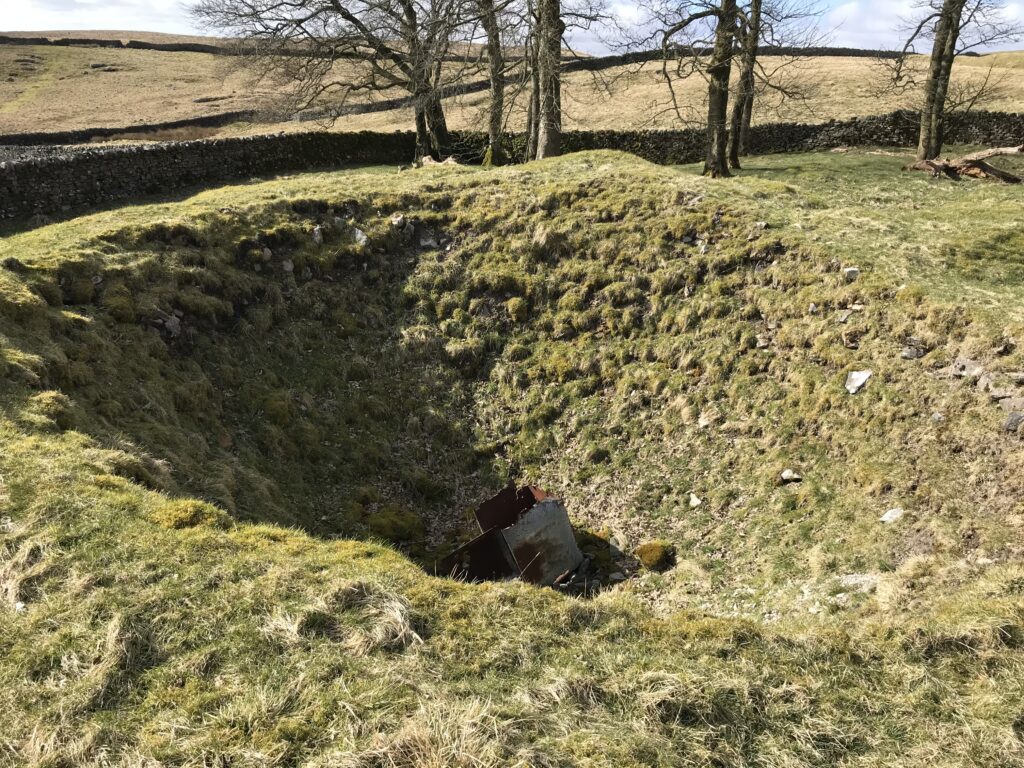
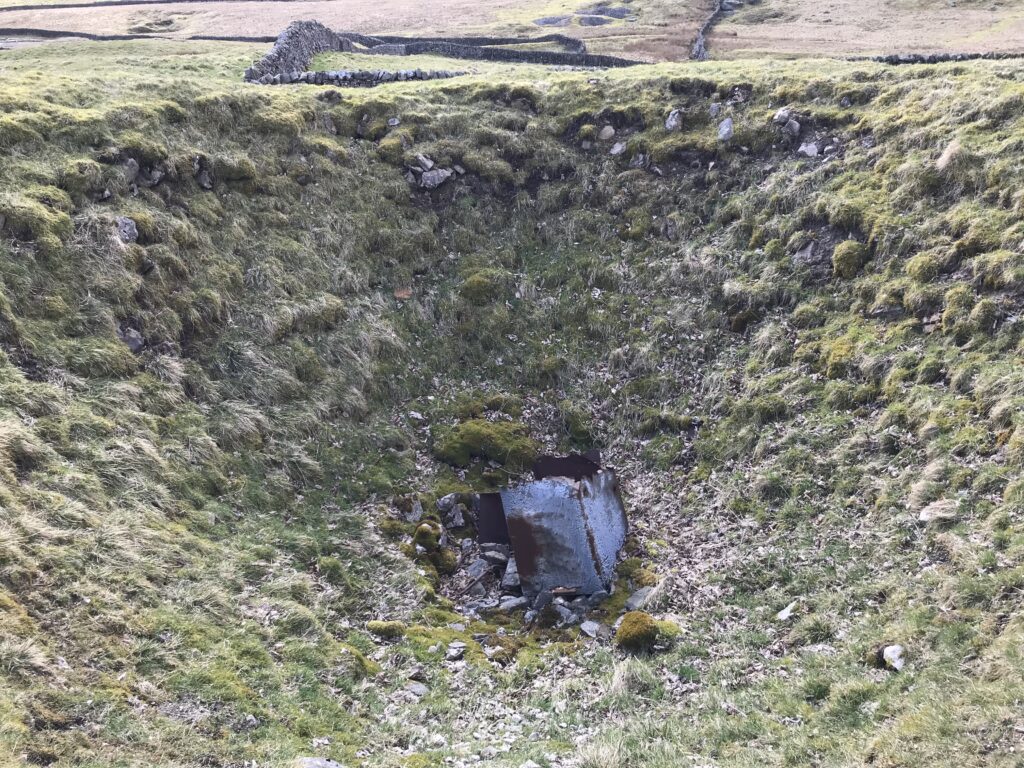
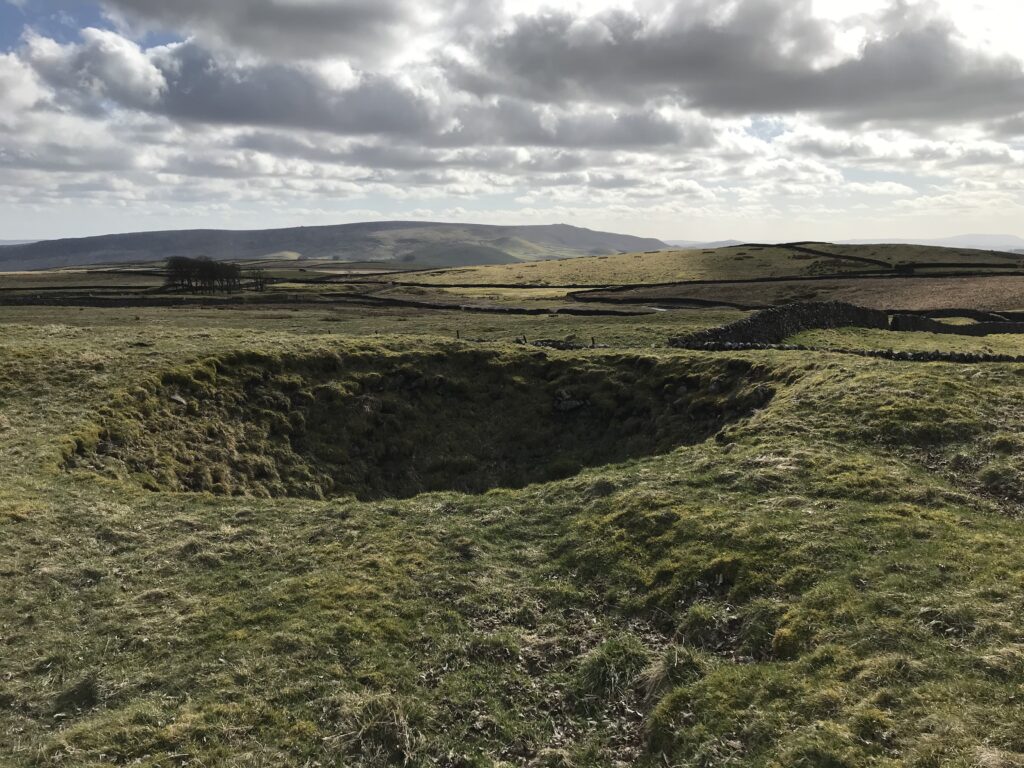
The Grassington Mines Appreciation Group revisited the mine in early 2021 to find that the shaft had collapsed. All that remains is a large crater where the shaft once stood, and it is assumed that the iron collar gave way leading to a total collapse of the shaft lining. Whilst it may be possible to one day excavate the shaft, there are many more promising projects across Grassington Moor which should be tackled first.