Operated from 1605 to 1793, the Low Mill is situated near Grassington town centre next to the River Wharfe, and directly across from Linton Church. This was the first of Grassington’s four smelt mills and was constructed by the Earl of Cumberland to process lead ore from the mines around Yarnbury as well as Thorpe and Lea Green. The mill was so productive that two horse loads of ore from mines in Thieveley (near Burnley) were sent to Low Mill in order to determine their value. As a result, smelters from both Grassington and Derbyshire were sent over to Thieveley in order to establish why their mill was producing lead so inefficiently. It was determined that the type of bellows used by the Thieveley smelt mill was the problem.
The Low Mill used what is referred to as an Ore Hearth whereby the material would be heated inside an arched recess, with the fumes rising up and out of the chimney directly above the hearth. In order to increase the heat enough to smelt the Galena, bellows were operated from a waterwheel that was powered by a nearby resurgence called Brow Well. This water came from underground meaning that during the winter months the water would not freeze and the mill could continue to operate. Interestingly the Brow Well resurgence is now utilised by a fish farm which is located just outside of Grassington on the road towards Hebden.
The fuel used was kiln dried wood referred to as “chop wood” and peat, however a small amount of coal was also added. It was important not to add too much coal to the fire as the fumes could spoil the lead. The wood was obtained from a number of areas including Grass Woods located to the East of Grassington. It was also here where the logs were debarked and dried within large kilns.
During the early years, most mines were worked by small partnerships of between two and three men. They were referred to as “free miners” and would pay the mineral lord to have their ore smelted. This was generally by giving every fifth piece or “pig” of lead smelted. The Low Mill initially had only one ore hearth, but during 1741 a second was completed, followed by a third in 1754. The third hearth was paid for by one of the first major mining companies of the area The Coalgrovebeck Company who will be discussed in further detail during the section on the Moor Mill. The company made a rich strike in their mine and this overwhelmed the Low Mill’s capacity, leading to the third hearth being built.
The chimneys extending from the Low Mill were around 12ft or 3.65 metres above the roof line, and caused serious pollution to the surrounding fields. On a number of occasions such as in 1781, a group of local farmers claimed compensation after cattle crossed the river Wharfe from Linton and were poisoned by the contaminated grass.
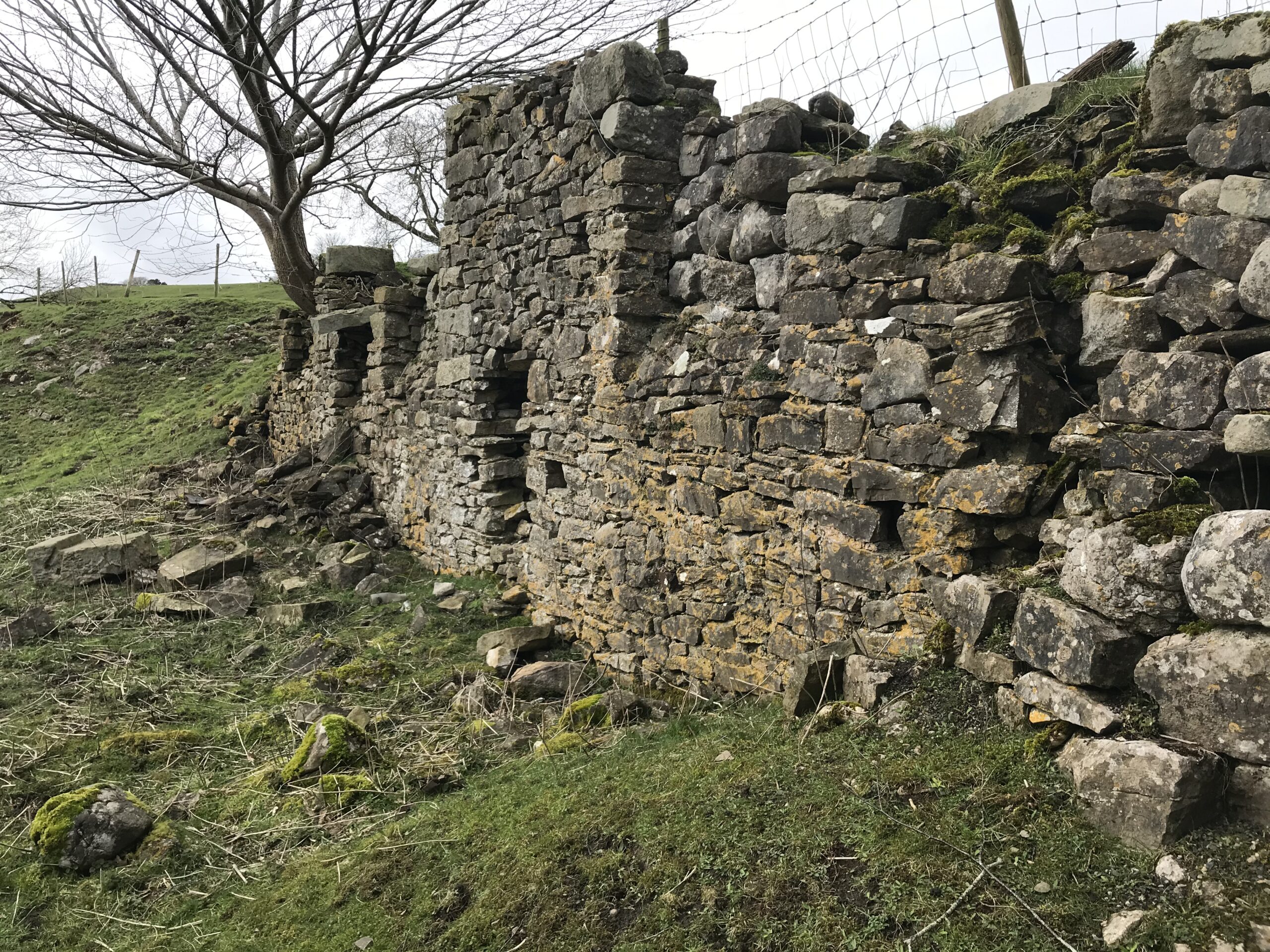
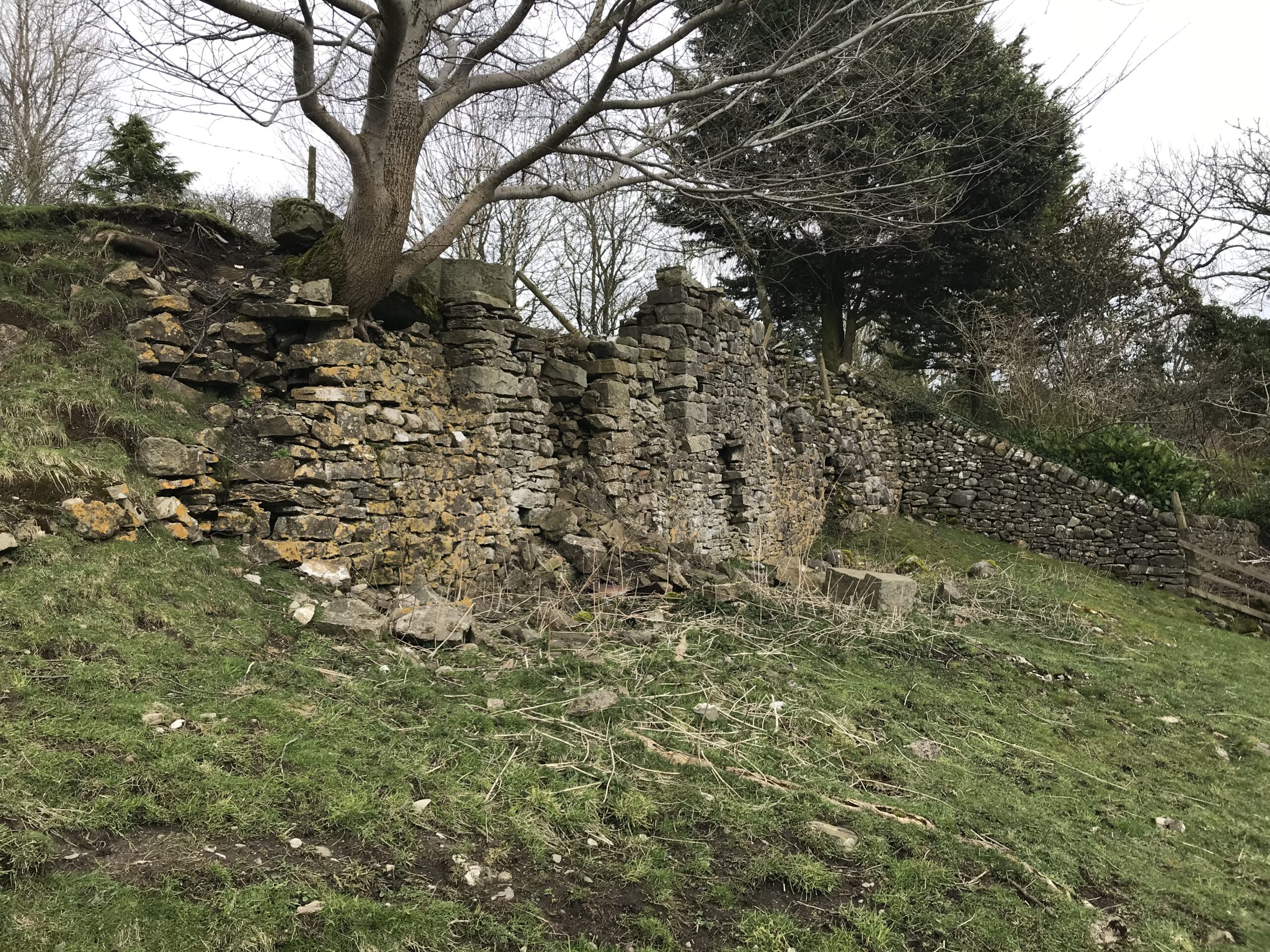
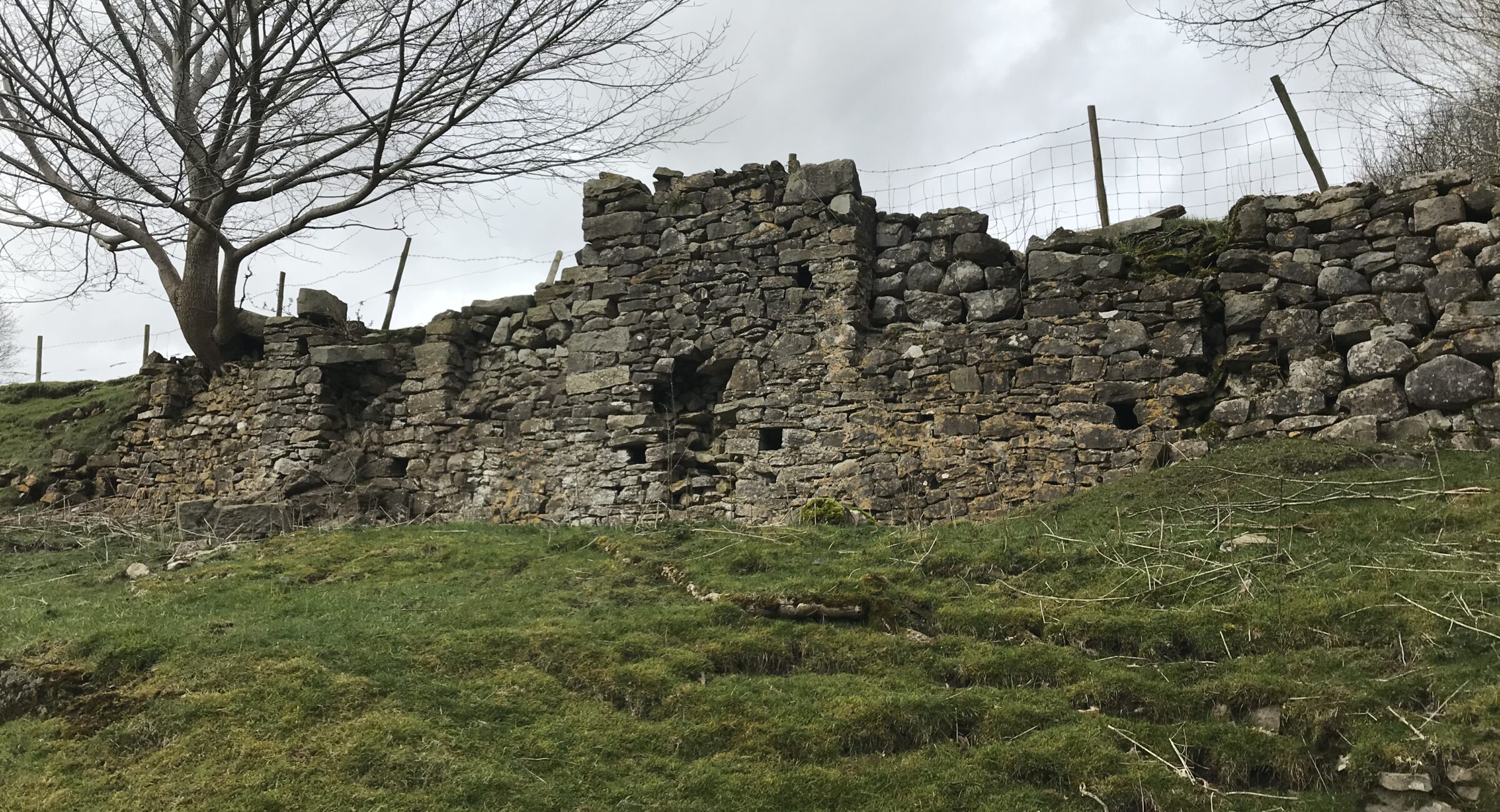
Remnants of the Low Mill can still be found next to the river at grid reference SE.00626327. The only discernable features are the back wall of the mill with a tree growing out of the far left section of walling. The mill lies only a few metres from the banks of the river and is in a poor state of disrepair given that it has not been in operation for well over 200 years. The images shown below were taken in 2020 by a member of the Grassington Mines Appreciation Group.