The Mill
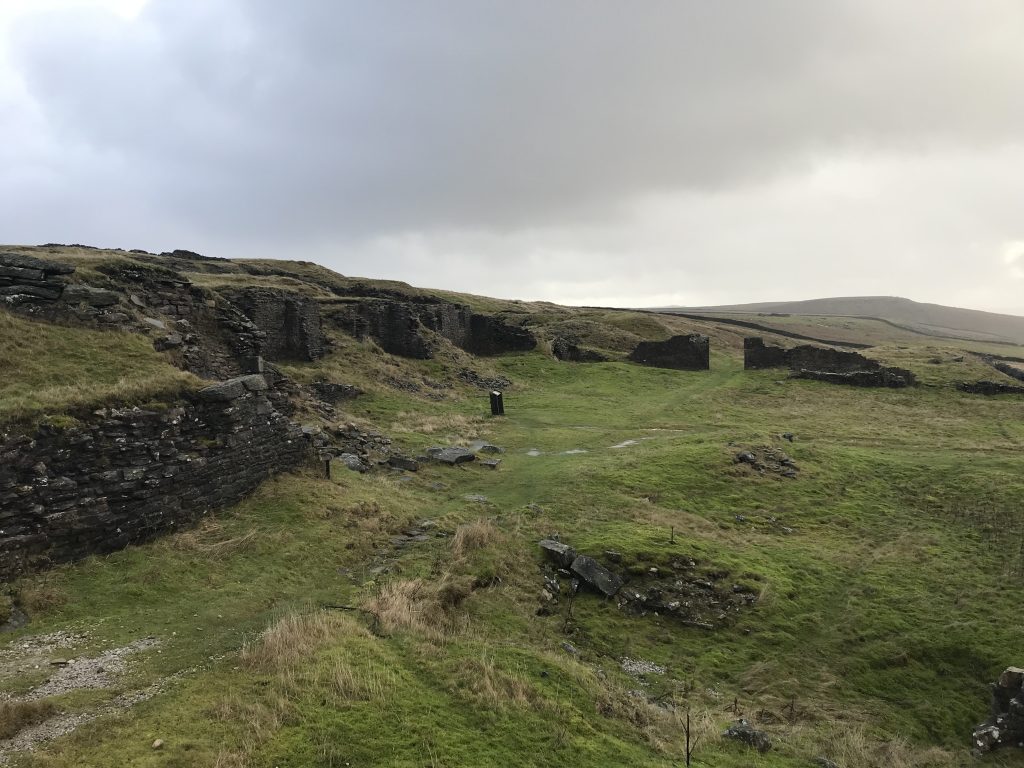
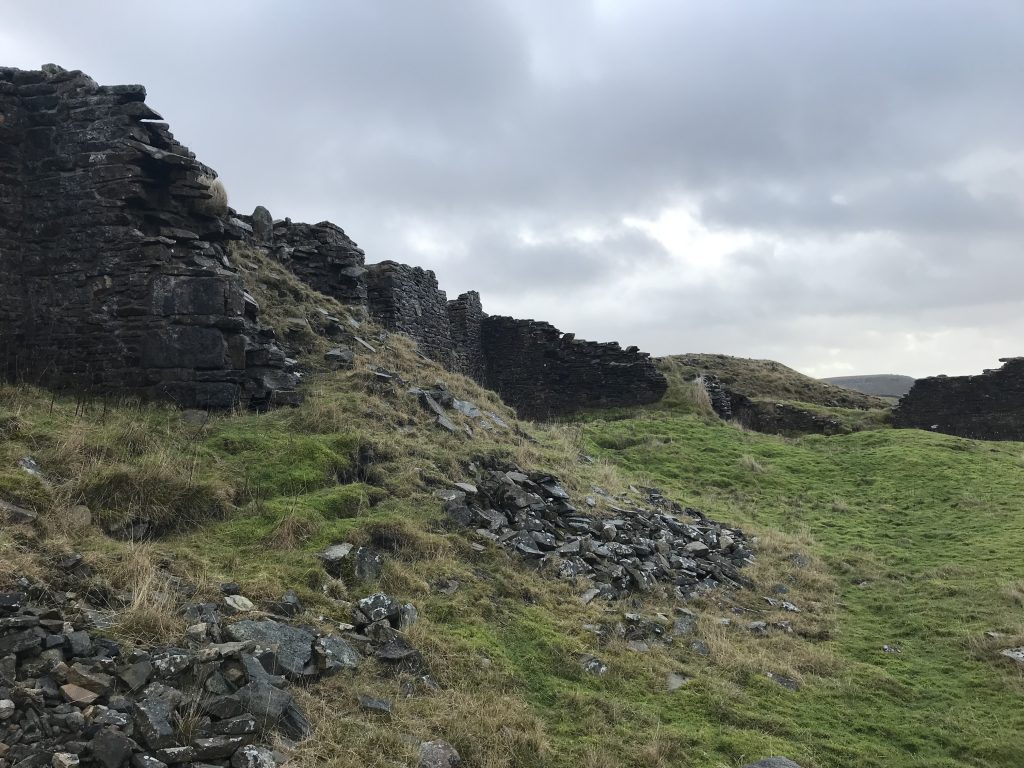
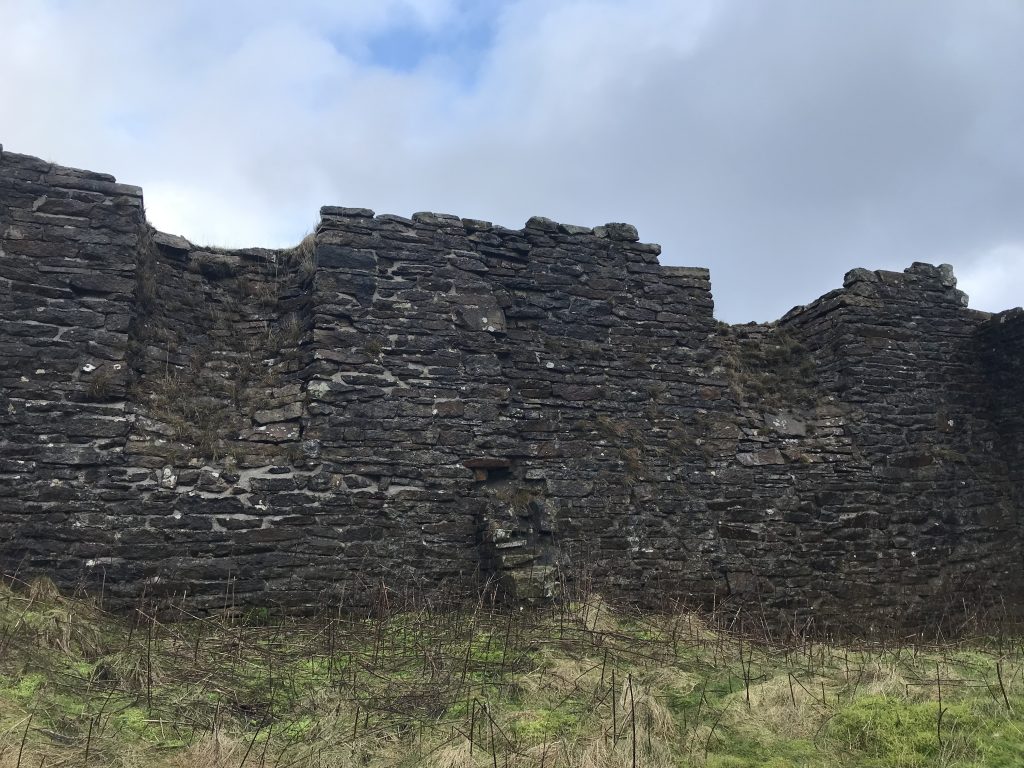
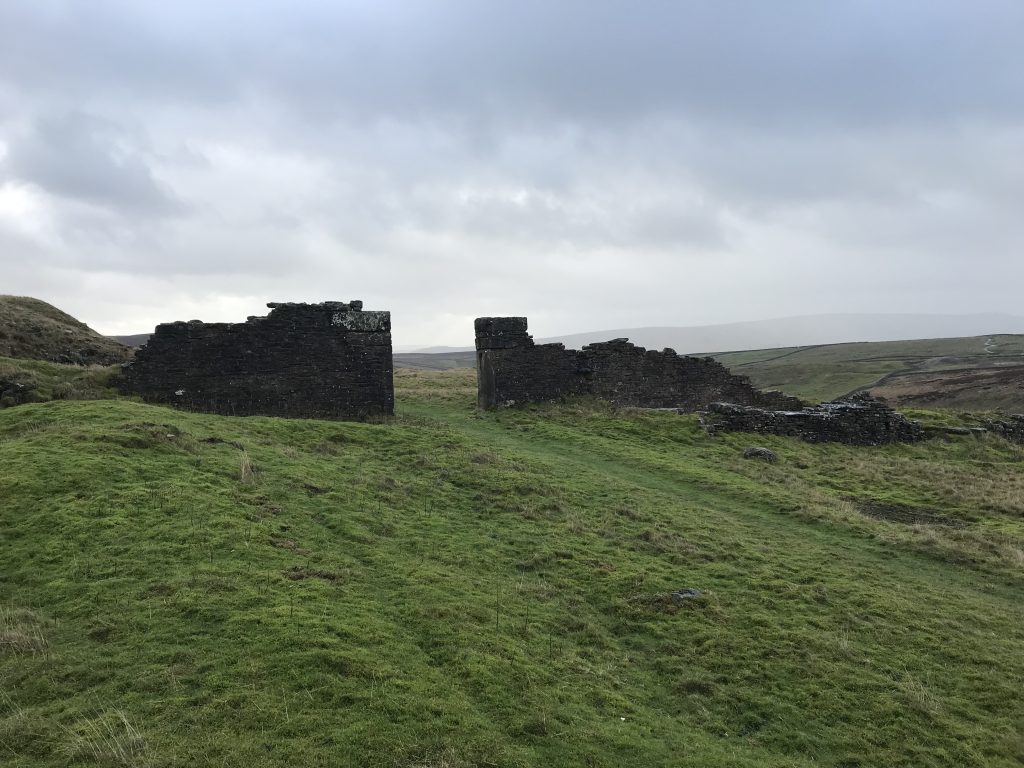
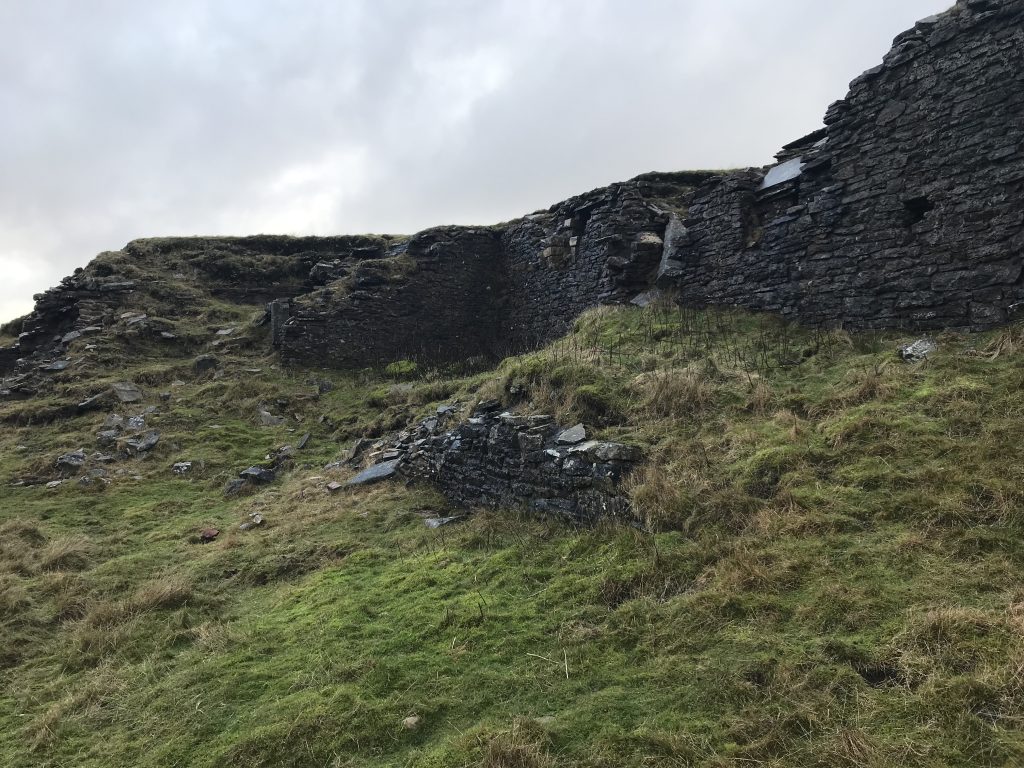
Located at grid reference SE 0249,6630 the Cupola Smelt Mill is one of the most recognizable features remaining on Grassington Moor. Constructed in 1792, the mill operated until closure of the mines in 1882 and was constructed at the expense of the Duke of Devonshire. The Duke owned the mineral rights across the moor and permissions to mine were leased out by the mineral agent acting on his behalf. It has been suggested that in an effort to drive investment in the moor, the duke paid for construction of the Cupola Smelt Mill, and also funded the construction of a level driven from Hebden in order to drain the mines of water. This adit is referred to as the Dukes Deep Level and has been explored by members of the Grassington Mines Appreciation Group. Here’s a link to the page providing more information on the level and it’s construction.
In regards to the Smelt Mill however, the reasons for its construction may simply be because the owner of the mineral rights would usually provide a smelt mill for the mines. The Duke would pay for repairs to the mill and would also provide fuel, tools and smelters. In return for use of the mill, the miners would usually give a “duty” which was one fifth of the lead they extracted to the Duke, though towards the end of the 1700’s and throughout the 1800’s this rate fell due to a fall in the price of lead amongst other reasons. The mill used reverberatory furnaces which are referred to as Cupola’s hence the name, and this type of mill used coal rather than peat or chop wood which was much easier to come by. The Dukes estate had limited access to wood and had been relying on peat for a period, however in 1794, this was disputed by the freeholders who claimed the Duke had no right to extract peat from Grassington Moor. This led to the reliance on high quality coal via the Leeds and Liverpool Canal which was transported via the canal to Gargrave, and then brought up to the moor via horse and cart.
The main difference between the Cupola Mill and the three other smelt mills that were used in Grassington was the way in which ore was smelted. The other mills used ore hearths where the lead would be melted directly on top of the fire. With a reverberatory furnace, coal would be burn on a separate fire grate with the heat being reflected onto the ore. This meant that the coal smoke could be kept away from the lead and would allow more lead to be smelted at once. Furthermore, reverberatory furnaces could work for much longer as the temperature could be controlled which meant that these furnaces provided savings in fuel, idle time and the amount of ore that could be smelted at any one time. Below is a simple diagram of how a reverberatory furnace would operate.
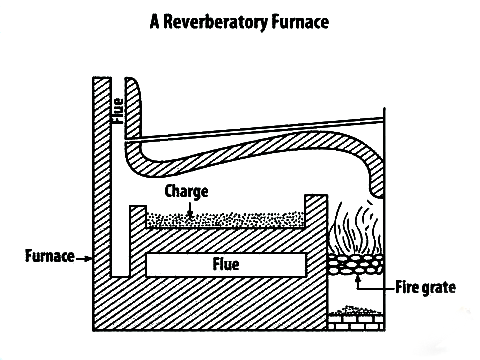
Source: www.toppr.com
The Flues and Chimney
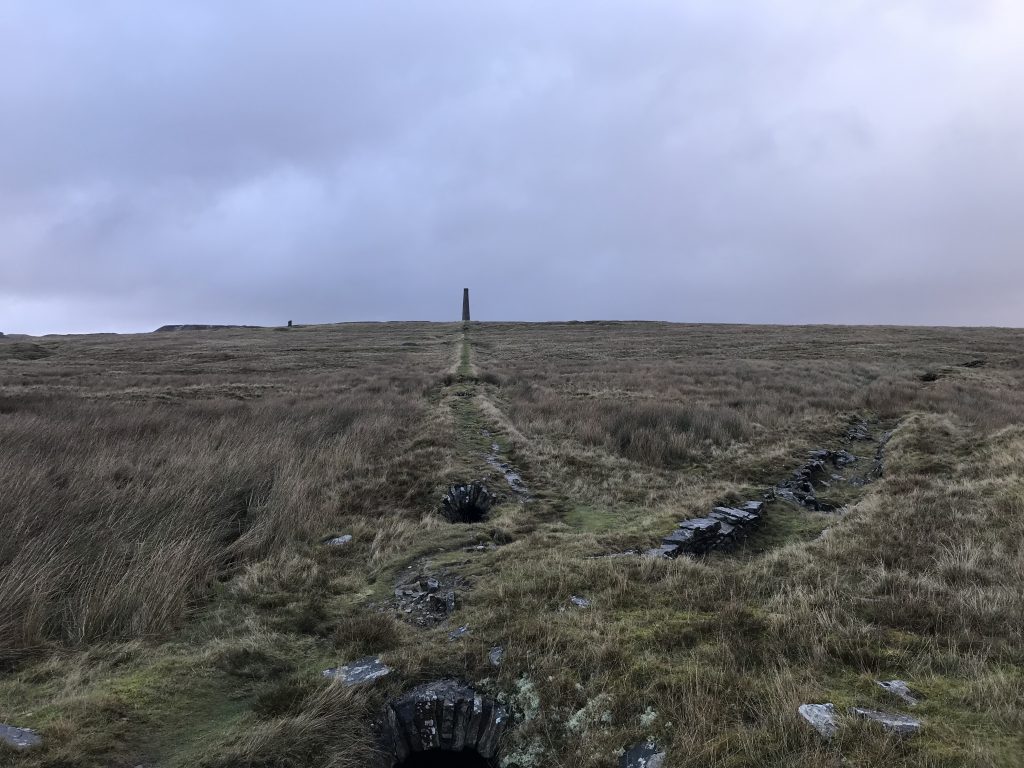
The first ore smelted at the Cupola mill was from the Three Footed Stool Mine located west of the New Pasture wall and at grid reference SE and it initially had only two furnaces, with a slag-hearth built in 1840. A slag hearth smelts the waste material (slag) from the other reverbatory furnaces to extract any lead left in it. This hearth needed bellows to raise the temperature this was powered from a waterwheel which had previously been used at the Moor Mill. There were two chimneys situated 45 metres behind the mill, the eastern chimney connected to the furnaces and the western chimney connected to the slag hearth. In 1849, the two chimneys were demolished and replaced by the 18 metre high chimney that still stands on Grassington Moor. This chimney is situated 500 metres from the mill, and was initially connected by a straight flue that ran horisontally from the rear of the mill up to the base of the chimney. All three flues from each furnace converged after a short distance to connect with the main flue which then ran all the way up to the chimney.
Approximately 150 metres from the chimney however, a condenser was built to catch particles of lead. This condenser was a simple chamber packed with wet brushwood whereby the fumes would pass over the wood and deposit lead particles on it. The brushwood would then be burned and high quality lead could be extracted.
The flue was extended further in 1852 where an additional section was connected between the condenser and the chimney. This section broke off from the main flue, up to another condenser. It then continued around the rear of the chimney and back down to where the initial section was connected. This section of flue added an additional 335 metres to the initial 500 metres that the fumes would have travelled up to the chimney.
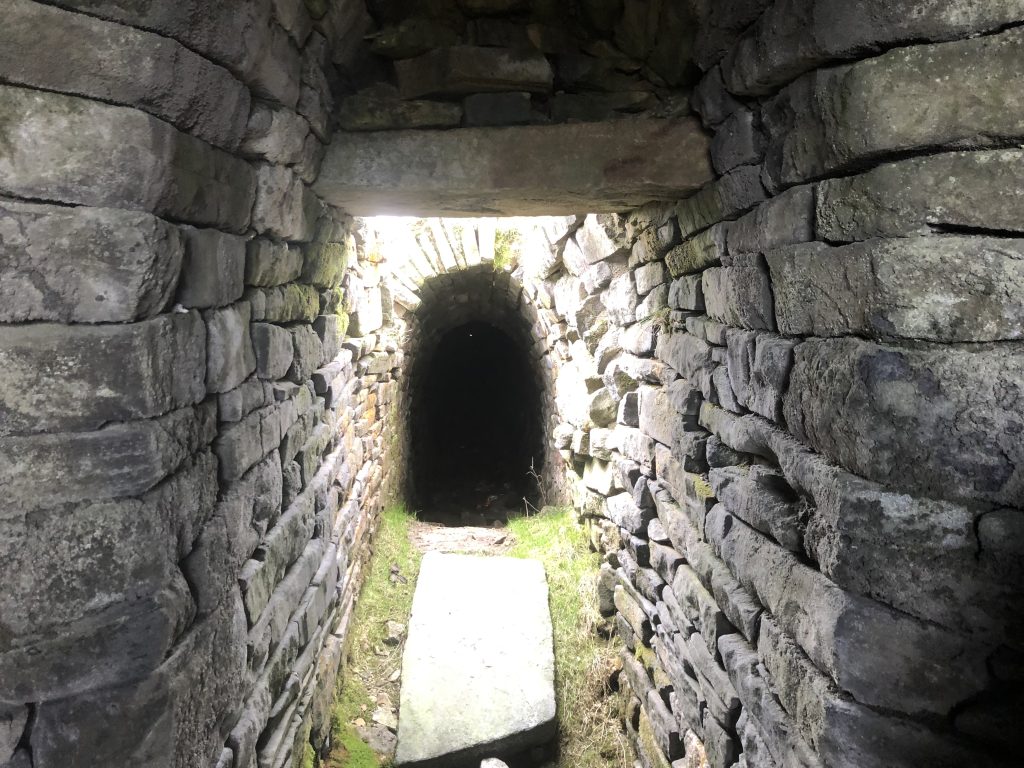
In 1855 another section of flue was connected between the cupola mill and the first condenser and was 680 metres long. This section ran in a loop breaking off from the main flue out to the east, and then looping round before rejoining the main flue at the same point. In total this meant that fumes from the three hearths could be made to travel around 1.8km before reaching the chimney. The way in which the fumes were diverted was to use a large flagstone to block access along the main flue which would force the gasses to travel up the alternate sections of flue.
The idea of doing this was to give the gases time to cool and any particles of lead would settle on the walls of the flue. By diverting water down the flues, the particles would be washed into two settling pits that were located close to the smelt mill. These collected particles along with anything collected in the condensers would be re-smelted and provided very high quality lead.
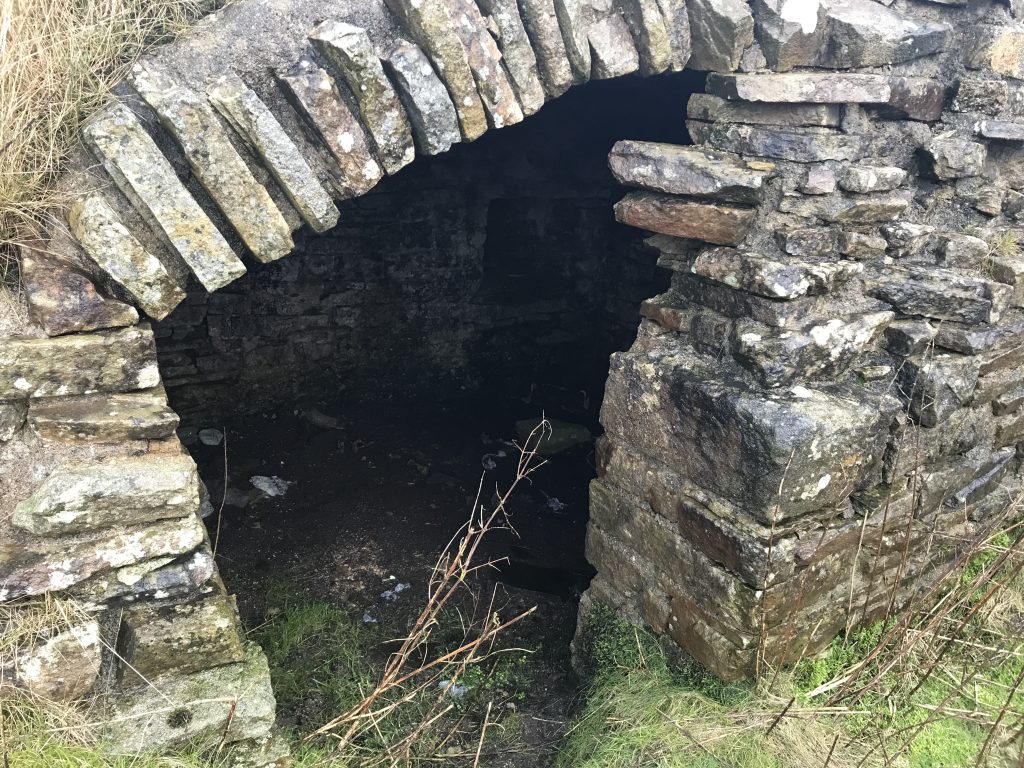
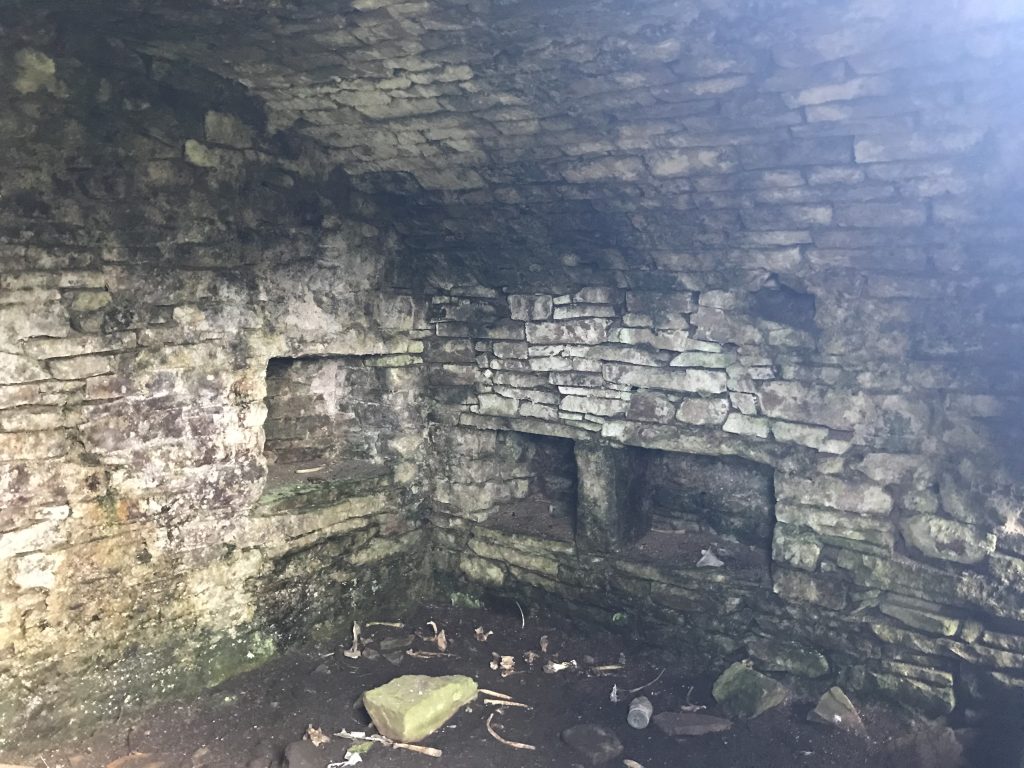
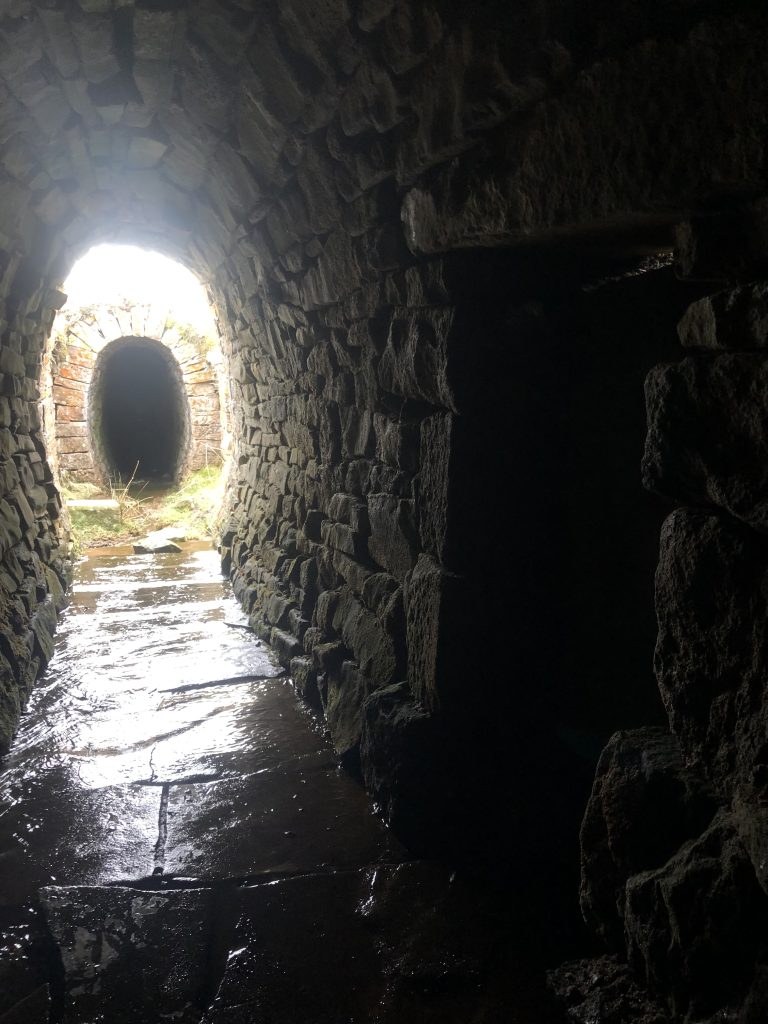
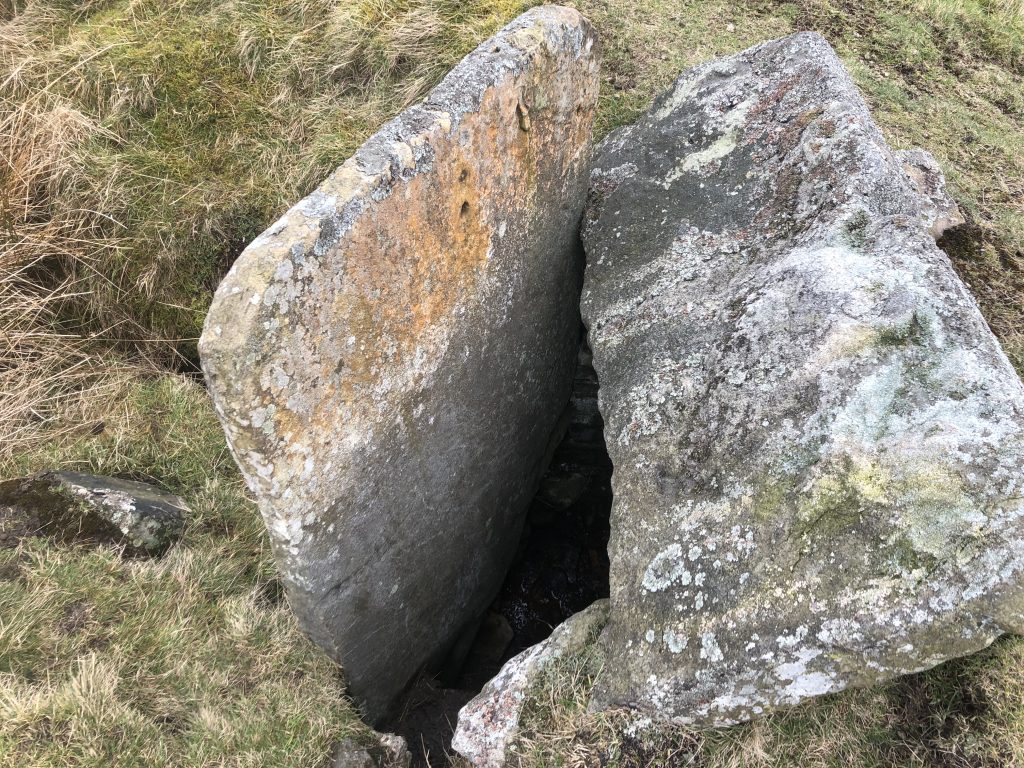
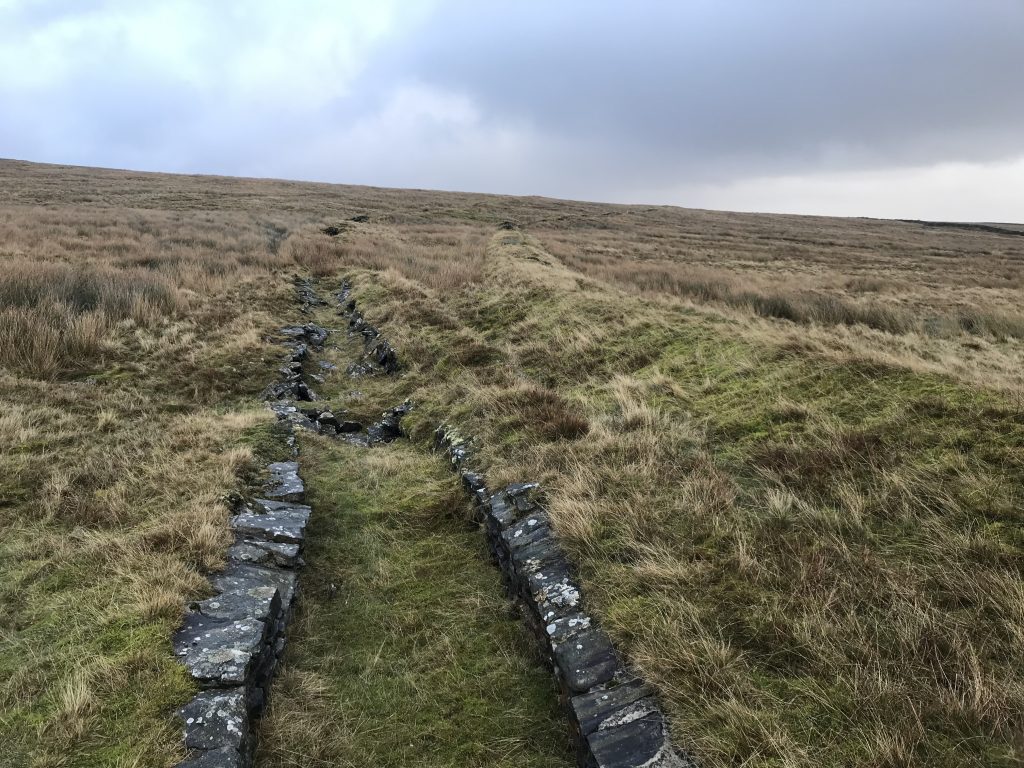
The 1.8km flues can still be seen on the moor and there are sections you can walk through. They were dug into the ground and consist of a flagstone floor with dry stone walling on either side. On the roof, the stones are formed into an arch which was then covered with turf. This stops any fume from escaping from the system as it travels through the tunnels.
Smelting Process
Material to be smelted would be retained in a large hopper above the furnace and when a valve was opened, would slide down a chute before reaching an opening in the roof of the furnace. This hole was covered with an iron plate that could be moved out of the way when the material was being loaded. A workman would then spread the material uniformly within the furnace before the temperature was raised within the furnace in order to smelt the ore. Throughout the smelting process, the ore would be turned over a number of times by a workman and various doors would be opened and closed to allow access or to create oxidizing conditions inside the furnace. Finally, the pure lead would collect in a sump at the bottom of the furnace and then tapped off into a sumpter pot. The whole process took around 7 to 8 hours and is described in great detail within British Mining 46 for those who may be interested.